How to Choose the Best Car Accident Lawyer in Corvallis, OR: What to Look For Before You Hire

August 19, 2026

How to Choose the Best Car Accident Lawyer in Corvallis, OR: What to Look For Before You Hire

Choosing a car accident lawyer in Corvallis is not the same as choosing a general personal injury attorney. Oregon's modified comparative fault rules, mandatory PIP coverage requirements, and uninsured motorist claim procedures create issues that are specific to auto crashes — and an attorney without hands-on car accident experience may miss them entirely, costing you money you're legally owed.

The moment an insurance adjuster calls — often within 24 to 72 hours of a crash on corridors like Highway 99W or Highway 20 — the vetting process matters. What follows are the car-accident-specific criteria that should drive your decision.

How Does Oregon's Fault System Affect Your Settlement?

Oregon uses modified comparative fault: if you are found 51% or more at fault, you recover nothing; below that threshold, your damages are reduced by your percentage of fault.

Insurance adjusters routinely try to inflate your share of the blame to reduce what they pay. For example, if your damages total $100,000 and the insurer argues you were 30% at fault, your recovery drops to $70,000. A skilled car accident attorney will challenge inflated fault percentages using accident reconstruction, witness statements, and police report analysis.

When you speak with a prospective attorney, ask: 'How have you handled cases where the insurer tried to assign partial fault to your client?' An experienced lawyer will describe a specific counter-strategy — not a vague assurance. You can also review Corvallis car accident claims for more on how fault disputes are handled in Oregon.

Does Your Attorney Understand Oregon PIP and Subrogation?

Oregon requires at least $15,000 in Personal Injury Protection (PIP) coverage on all auto policies — it pays your medical bills and lost wages regardless of who caused the crash.

Here's where it gets complicated: if you later recover a settlement, your PIP carrier may demand reimbursement through a process called subrogation. An attorney who does not negotiate this reimbursement down can leave a significant portion of your recovery going back to the insurer instead of to you.

Ask any prospective attorney: 'How do you handle PIP coordination and subrogation in your settlements?' If they can't describe a specific negotiation approach, that's a gap that will affect your net recovery. The difference between accepting full PIP reimbursement and negotiating it down can easily run into thousands of dollars.

Why UM/UIM Experience Is Non-Negotiable in Oregon

Oregon's minimum uninsured/underinsured motorist (UM/UIM) coverage is $25,000 per person and $50,000 per incident — amounts that fall short fast in serious injury cases.

Many crash victims in Corvallis don't realize they can file a UM/UIM claim against their own insurer when the at-fault driver had no coverage or not enough. This process requires the same adversarial approach as a third-party claim — your own insurer will still look for reasons to minimize the payout. Ask: 'Have you litigated UM/UIM claims in Oregon?' This is a distinct skill set from standard liability claims, and not every attorney has it.

Why Benton County Court Familiarity Matters

Local court experience is directly tied to litigation outcomes — knowing how Benton County judges run their courtrooms and what local juries respond to is a practical advantage, not just a talking point.

Corvallis is the county seat of Benton County, so any lawsuit from a crash here goes to Benton County Circuit Court. An attorney based in Portland or Salem who has never filed there may be unfamiliar with local procedural tendencies, and that can affect how a case is presented and resolved.

Ask prospective attorneys: 'Have you filed or litigated car accident cases in Benton County Circuit Court?' A clear yes with specifics is the answer you want. Familiarity with local procedure reduces delays and positions your case more effectively if settlement talks stall.

How Contingency Fees Work for Car Accident Claims

Most car accident lawyers work on contingency — you pay no upfront fee, and the attorney takes a percentage only if you recover. In Oregon, this is typically around 33% before a lawsuit is filed, rising to roughly 40% if the case goes to trial.

Costs like filing fees, expert witnesses, and accident reconstruction are usually advanced by the firm and then deducted from your recovery at the end — confirm this in writing before you sign anything. The key green flag is transparency: a trustworthy attorney will walk you through exactly how the fee changes at each stage of the case.

When the fee structure is vague or changes are explained only after you've already signed, that's a problem. Ask for a written contingency agreement that spells out percentages and cost deductions at every stage.

Red Flags When Evaluating Attorneys

These warning signs are specific to car accident claims — not general criteria:

  • Can't explain Oregon's comparative fault rules or how they'd push back on an inflated fault percentage
  • No experience negotiating PIP subrogation — will accept full carrier reimbursement without question
  • Has never litigated a UM/UIM claim in Oregon
  • Has never filed a case in Benton County Circuit Court
  • Tells you to delay medical treatment until the case resolves — this harms both your health and your claim value
  • Pushes you to accept the first offer without a full damages analysis
  • Can't describe their protocol for handling adjuster contact in the first 72 hours after a crash
  • Fee structure is vague or not provided in writing

When Should You Call a Lawyer?

Call before responding to any insurance offer — even one that seems fair. Settling too early, before your injuries are fully diagnosed, permanently forfeits your right to future medical compensation.

Specific triggers to act now: you've been contacted by the other driver's insurer within 72 hours; you've been asked to give a recorded statement; the at-fault driver had minimal or no coverage; or your injuries haven't been fully evaluated yet. Soft tissue injuries and traumatic brain injury symptoms often don't appear immediately, which is exactly why early settlement offers are risky. Review the steps to take after a Corvallis crash so you know what to document before any conversation with an adjuster.

Choosing an attorney with car-accident-specific skills — comparative fault strategy, PIP and UM/UIM experience, and Benton County familiarity — directly affects how much of your recovery you actually keep.

Schedule a consultation with Hunking Law, LLC to review your Corvallis crash claim before you respond to any offer or recorded statement request.

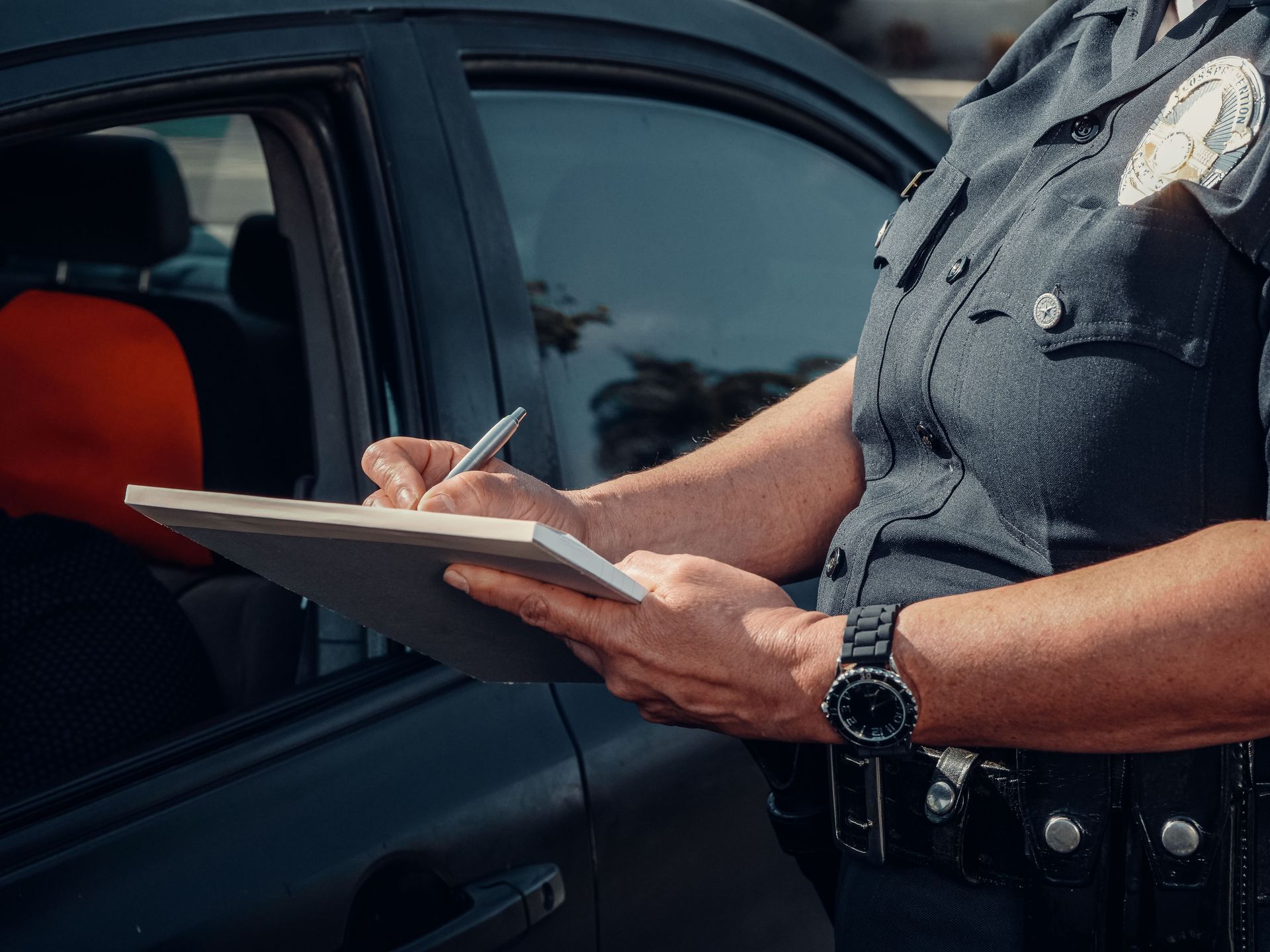
A police officer writing on a pad standing next to a car with the window rolled down.
By josh August 4, 2026
Bottom-Line-Up-Front: We gather factual information about the accident to build legal claims and protect legal rights. The Long Answer: Welcome back. To recap, we are discussing the theoretical scenario where my little sister Katherine was hit by a drunk driver in Salem, Oregon and I am walking my way through what I would do to help her navigate the legal aspects of this issue. We left off with identifying any and all potentially liable Dram Shop litigants and ensure that they are served with a Dram Shop notice in order to preserve any claims. 6. Let the Dust Settle and Gather What We Can The next thing I would expect to happen at this point is a little bit of dust settling. I will have the chance to really dive quite a bit more deeply into the facts of the case and the damages to Katherine. In doing this I would have a long conversation with Katherine about her physical condition and her memory of what happened. Simultaneously I would send an investigator to grab and footage we were able to identify that may have captured the crash. Notably, it is difficult to get this information as a civil attorney without a subpoena; but it is pretty early in the process to file a case so that we have the subpoena power. Thus, it is useful to allow the police to do their jobs in building out the criminal case. If we can identify a source of footage of the crash the police have the authority to seize that evidence or get a warrant for the seizure of that evidence because typically the criminal case moves faster than any civil case. 7. Leverage the Criminal Process The criminal process is not instantaneous, even though it is relatively quick. If the police did not hold the drunk driver in custody, but instead gave the person a citation with a court date that would likely be 30 days after the crash, depending on the court system the person was cited into. That first court date is simply an arraignment and while there is some opportunity to speak it is unlikely that prior to that arraignment actually happening that the prosecutor would be willing and able to produce criminal discovery to the drunk driver and to my office. That said, initial disclosure of discovery in criminal cases typically happens within days of the arraignment and many prosecutors offices complete this electronically which saves a little bit of time. The first set of discovery though likely will only include BAC (blood alcohol concentration) information (and other documents from the implied consent process) and police reports from the primary officers. Sometimes this includes dash cam or body cam footage; but regularly that information comes in a second tranche of information months or weeks down the road. Nevertheless, the police reports are a good source of information regarding other witnesses we may not have captured as well as a narrative from the drunk driver’s perspective about what happened. Further, it will almost certainly have additional information regarding what happened with the drunk driver after Katherine left the scene. I would scrutinize the narrative and cross reference it with knowledge of the area as well as google maps to be as comprehensive as possible in identifying potentially liable Dram Shop litigants. Most civil personal injury attorneys do not touch the criminal side of the case at all, and they miss out on all this information. At Hunking Law, our attorneys are knowledgeable about every component of a DUI case, including the criminal side and are able to leverage this knowledge to the benefit of our clients. 8. Treat Injuries to Reach Maximum Medical Improvement While this is going on Katherine is likely also treating for her injuries. This is an interesting time in a civil case because honestly the best thing to do in this time period is typically to allow the medical professionals to do their job and allow Katherine to heal from any injuries. This is true because in evaluating compensatory damages (economic and non-economic damages as defined in ORS 31.705 ) we are trying to put the person back to where they would have been if the crash had never happened. If the person is in the process of healing it is premature to determine what is required to get them back to where they were pre-crash. For example, if someone has a lingering shoulder issue post-crash it is possible that it heals in 3 months; or it may heal in 6 months; or it may require a surgery to heal; or potentially it never heals fully at all and the person simply has a lingering permanent injury in their shoulder. The goal is for the person to reach Maximum Medical Improvement, a point at which they are fully healed or have recovered as much as possible and are not expected to improve further. Until the dust fully settles on healing or getting to Maximum Medical Improvement you simply do not know the full scope of compensatory damages in a case. This doesn’t mean that nothing is happening though. We can still pull medical records. We will almost certainly get Explanations of Benefits (“EOB”) which are sent by the PIP (personal injury protection) carrier regarding what they paid, how much they paid and how much was denied. As those records come in (we get dozens of them every day in the mail for various clients) we sort and organize them into the file which helps us get to a comprehensive view of the case though ultimately EOBs are almost always insufficient on their own to give us a good idea of the scope of injuries. Until Next Time With that, it looks like I am going to need to get to at least a part 3 because as it sits we have just gathered and begun analyzing information. More to come! Need an Attorney? If you or someone you know was in a crash in Oregon caused by a driver who was under the influence of intoxicants or otherwise negligent, call 541-HUNKING (541-486-5464) or fill out our contact form to schedule a free consultation with one of our attorneys. We are here to help.
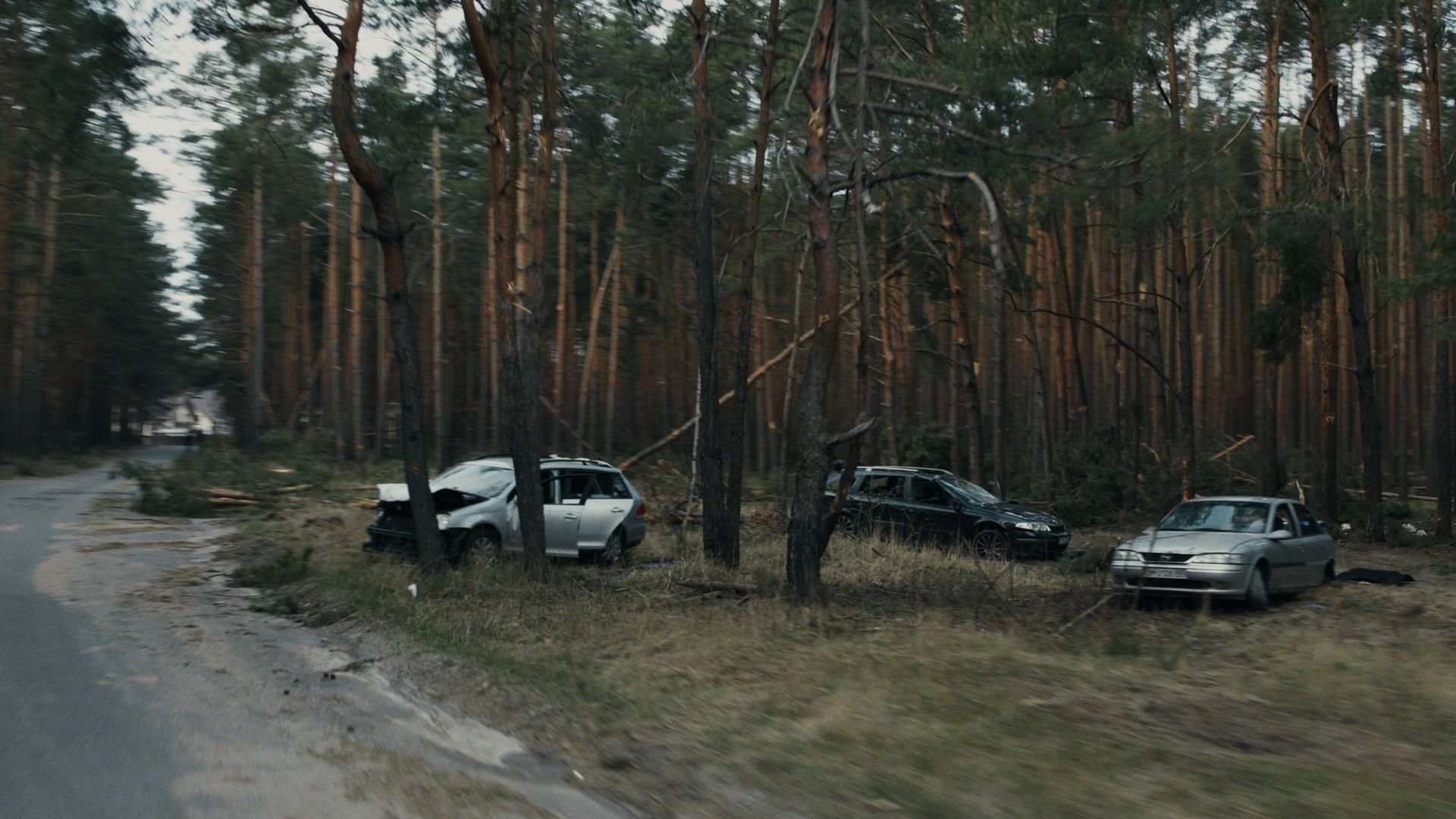
Three cars pulled off a road, a white car is crashed into a tree, the others are black and silver.
July 28, 2026
Bottom-Line-Up-Front: We gather factual information about the accident to build legal claims and protect legal rights. The Long Answer: Many times, as an attorney I am asked “Is it legal?” and the difficulty with answering that question is that because there is so much missing essential information, I am unable to answer beyond “It depends”. So the real answer to this question is it depends on what step in the process the person reaches out to a personal injury attorney. Stated another way, what I actually do changes depending on what has already been done and what remains to be done. Thus, in order to get the right information out there, I am going to use a hypothetical scenario where my little sister “Katherine” calls me as soon as a DUII crash happens. To set the scene; just after 5 pm on a Friday I get a call from Katherine who tells me that she was just rear-ended by a drunk driver near Salem, Oregon. 1. Safety First First, I would make sure she is physically ok and in a safe place. Just because something bad has happened doesn’t mean it cannot get worse and ensuring physical safety (like getting out of the road; stopping any bleeding) is secure is the priority. Next, I would want to know if the police have been called. If not I would call emergency dispatch (911) and let them know that there is an injury crash at the location provided by Katherine and that the driver of the other vehicle appears drunk. I would do that via a 3-way call so that both me and Katherine could talk with dispatch. Notably, I would be aware that because 911 calls are recorded in Oregon, that whatever we said to the 911 operator would likely be evidence in a future court hearing. 2. Document the Crash Next, once I was sure that physical safety was secure and that police were on the way I would advise Katherine to start taking pictures or video if she was physically able. I would be looking for pictures of the scene, the vehicles, as well as any physical injuries. Next, I would begin the process of capturing as much contact information as I could. Certainly, we would need the information of the drunk driver, but additionally we would be looking for the contact information of any other witness to the crash or its aftermath including passengers in Katherine’s vehicle or other people standing or driving by. Further, we would want to be sure to get the name, badge number and agency of any police officer on scene as well as any paramedics or other ambulance or fire personnel. Additionally, I would want the contact information and company name of the tow truck driver of any vehicle that was towed from the scene. Further, I would make note of any potential video cameras that may have captured the event to include: (1) personal dash camera, (2) built in cameras like Tesla has, (3) surveillance footage from local residents or local businesses (I have had decent luck over the years getting surveillance footage from OLCC (Oregon Liquor and Cannabis Commission) licensed outlets). I would not necessarily go and get that footage before getting Katherine and others on the scene necessary medical care; but I would be keenly focused on what potential camera footage is available so that it can be tracked down quickly. For example, if we know that there is a bar nearby that might have a camera pointed at the location of the incident then I can go and get the information in a few hours (or possibly the next day); but getting necessary medical care needs to happen much faster than that. Next, I would want Katherine to get to the ER (by ambulance if it is necessary, but if not by ambulance at least get there somehow if it is medically warranted). 3. File Claims Once all of these things are done I would begin to take a breath and start to be more focused on deliberate processing and less focused on reacting to the situation that thrust itself upon Katherine. That requires beginning to make contact with all the relevant parties. For example, we would need to open a claim with first party auto insurance (Katherine’s auto insurance carrier). Then we would need to open a claim with third party auto insurance (the at fault driver’s insurance carrier) as well as any other insurance carrier we are made aware of. 4. Leverage the Criminal Case Next, assuming a criminal case is filed, we would need to get copies of any citations that were issued and in particular we would want to know the date and time of the first court appearance and to make contact with the prosecuting attorney. We would send a discovery request under ORS 135.857 so that we could get from the prosecuting attorney all information made available to the drunk driver via the criminal discovery process. I would then work with Katherine to determine if she wanted to make a statement at arraignment (the first court appearance for the at fault driver in the criminal case) and if so, if she wanted to deliver that herself or if she wanted me or the prosecuting attorney to deliver that statement. 5. Look for Potential Dram Shop Parties Very quickly in this time period, I would be looking for all potentially liable Dram Shop parties. So, I would be looking for any bar that might have served the drunk driver while they were visibly intoxicated. Under ORS 471.565 we would need to at least get notice of the claim out to potentially liable OLCC outlets such that they have the chance to gather and preserve any evidence they may have about what happened inside the OLCC outlet prior to the person driving away and crashing. More to Come! Because this blog is on the long end I will call this part one and continue this in the future in what will likely become a few more parts. Continue to Part 2! Need an Attorney? If you or someone you know was in a crash in Oregon caused by an intoxicated or otherwise negligent driver, call 541-HUNKING to schedule a free consultation with one of our attorneys. We are here to help.

June 16, 2026
Bottom-Line-Up-Front: Because if we don’t care about our community, no one else will. The Long Answer: 1. Does Community Involvement Matter at all? Stated another way, this questions whether or not what we do has any impact at all on our communities. I think the answer to this question is clear that obviously we do. Sometimes it feels like we try hard to make the community better, and larger forces seem to make the community worse despite our efforts. But I am always reminded of Margaret Mead’s quote: “Never doubt that a small group of thoughtful, committed, citizens can change the world. Indeed, it is the only thing that ever has.” 2. How do we know that the involvement we intend to engage with will be a net positive to our community? Stated another way: “I know I am out here doing stuff (like giving $20 to a panhandler); but how do I know that the impact of what I do will actually be good (like the panhandler will not immediately use the $20 to buy beer, get drunk and punch someone)?” I struggle with this question daily and I think the struggle is the best we can do. We do not know the future and “The Good Place” TV show made a very compelling case because our modern society is so complicated and interconnected, there is no way for us to even know the true consequences of a choice. So, the best answer I have been able to come up with at this point in my life is to try and define what good is and to the best of my ability to evaluate every opportunity for community involvement to determine whether it is or is not good. I don’t have (and probably cannot get to) certainty in this realm because of the limits that we have as humans in modern society to determine the full consequences of our actions, especially when they only manifest themselves in the future. 3. If community involvement does matter, and we have identified a way to determine that our actions have a positive effect on our community, why should we care enough to actually do it? This is where I begin to really love this question and to truly enjoy the fact that I have the opportunity to work at Hunking Law. Modern business includes a healthy appreciation for “goodwill” that a brand has generated within the community. This is because people will buy products from companies they like before they will buy equal products from companies they do not like. Thus, I am blessed to be in a position where I get to spend time helping my community, and it also happens to be a justifiable use of business time. Additionally, because attorneys resolve conflict on behalf of humans, I spend a lot of time engaged with human conflict. As a result, it is a very welcome reprieve to go and repack diapers with the United Way of Lane County or help Corvallis Housing First as opposed to engaging with human conflict. Thus, I can additionally justify spending Hunking Law time on community involvement by the impacts it has on my employees (and selfishly, myself). Further still, my firm is filled with very competent people who would likely be very good at any task no matter what we decided to focus our attention on. I often say that we would be very good medical debt collectors if that is what we chose to do with the firm. But because we recognize that we can pick whatever mission we want (so long as it works within the bounds of capitalism) we get to choose how we spend our time and we chose the mission: “To export the greatest amount of justice, goodness and fairness as we can into the world.” Because I am blessed to work with good people who would choose to spend their time working on that mission, we get the pleasure of being able to spend our time helping people resolve car crash cases against insurance companies. I get to help an individual person each day deal with what is potentially the worst experience of their lives. And on top of that I get to go out into the community and make it better and safer and hopefully to make the future a little brighter. As a result, not only does community involvement matter, but I get the privilege of being able to spend my time and money on community involvement to try and make the Willamette Valley the best community it can possibly be. What is Hunking Law doing right now to support our community? Now through June 26th, we are collecting grooming and dental care essentials at our Corvallis office in preparation for Vina’s Back to School later this summer to ensure Benton County students have what they need to be confident and comfortable in the classroom. See this video if you’d like to learn more about how you can help!

Red toy car on a desk in front of a lawyer writing beside a gavel
June 3, 2026
Learn how car accident attorneys get paid through a contingent fee structure. Contact Hunking Law for expert legal help.
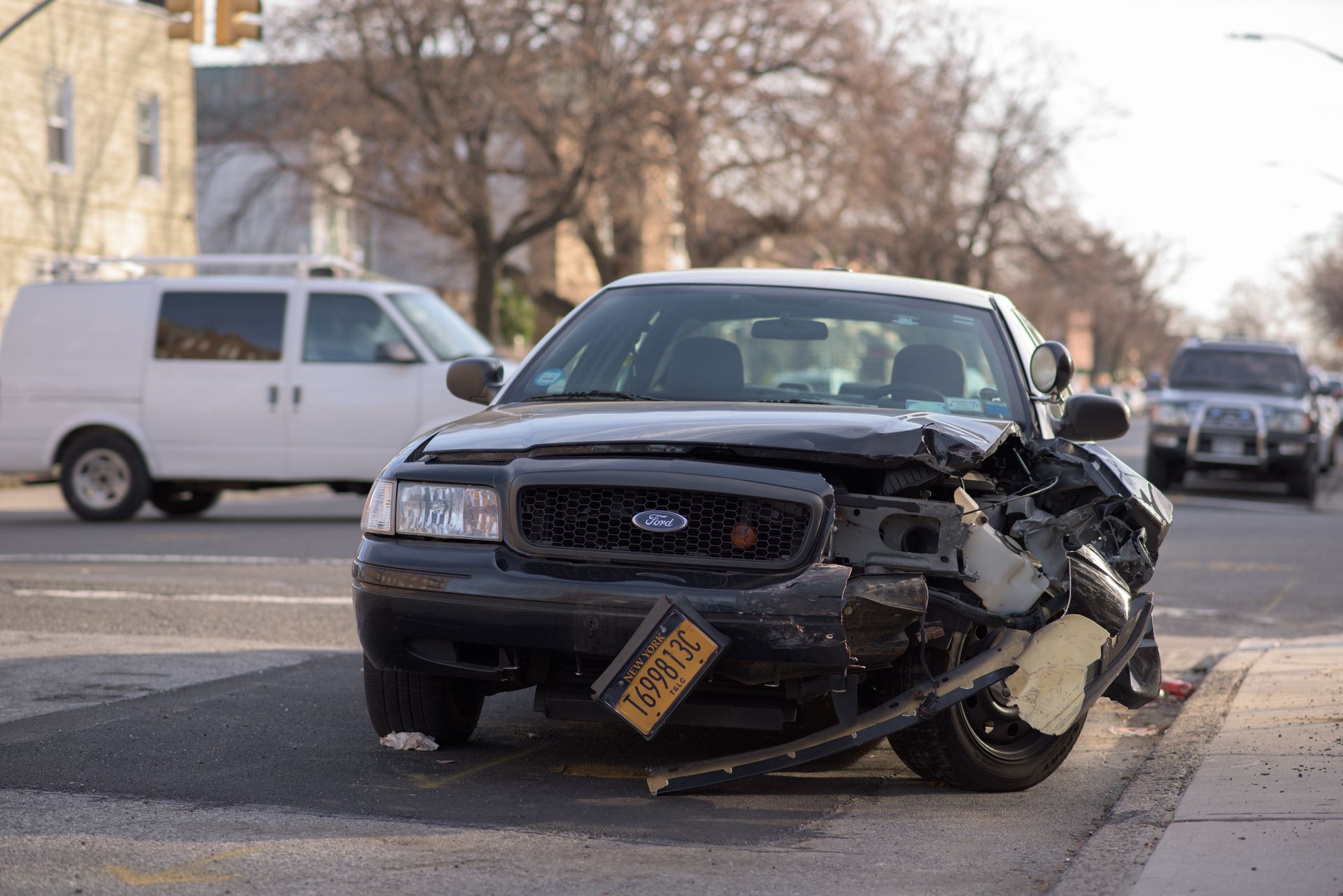
Damaged black sedan after a front-end collision on a street, with debris and a bent license plate.
April 8, 2026
Learn key Oregon car accident laws that affect your claims. Contact Hunking Law for expert personal injury legal assistance.

Person in a green sweater looking down at a smartphone, sitting with a hand on their face.
By Hunking Law March 23, 2026
Prepare for your attorney consultation after an accident. Gather key info on medical bills & insurance claims. Contact Hunking Law today!
Person kneeling beside a red car with visible rear damage, inspecting it on a street.
February 5, 2026
The Oregon DMV (Department of Motor Vehicles) makes a lot of their information and requirements public. With a few exceptions, they try to make a lot of information accessible to the public.

Motorcycle fallen on its side beside a white car on a wet street
January 7, 2026
Learn how motorcycle crashes differ from car crashes. Contact Hunking Law for expert legal help with your injury claim.
A wide river flows between lush green trees under a bright blue sky with wispy clouds.
December 12, 2025
Learn how the PNW Atmospheric River affects car crash liability. Contact Hunking Law for expert legal guidance on your case.
Woman sitting at table, face in hands, appearing sad. Natural light, indoors.
By Hunking Law October 21, 2025
South Eugene families' guide to understanding wrongful death legal representation. Learn about the claims process, damages, and what to expect from your attorney.
Show More